Overview
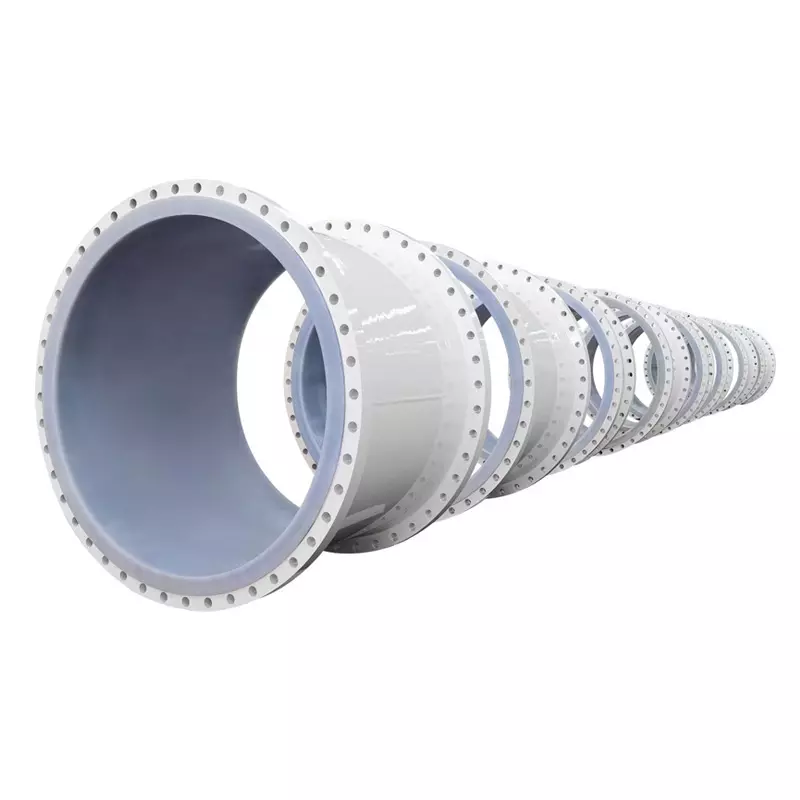
Anhui Xinfulong's Compression Molded Tower Sections are precision-engineered modular components for chemical towers, designed to deliver exceptional corrosion resistance, high purity, and long-term reliability in the most demanding process environments. Manufactured using advanced compression molding technology — typically with PTFE (polytetrafluoroethylene), PFA, or FEP fluoropolymer resins — our tower sections are ideal for use in reaction towers, absorption towers, distillation towers, and other column-type equipment across the chemical, semiconductor, pharmaceutical, and new energy industries.
The compression molding process involves loading high-purity fluoropolymer resin powder into a precision mold, then applying controlled temperature and pressure to form a dense, void-free lining. This method produces seamless, integral linings with uniform wall thickness and exceptional mechanical strength — eliminating the weld lines, seams, and potential failure points associated with alternative lining techniques.
Our tower sections employ a rugged composite structure of a steel outer shell (or metal framework) with a heavy-walled fluoropolymer inner lining, creating a robust barrier that protects the metal structure from aggressive chemical attack while ensuring the purity of the process media.
Key Features
Seamless, Integral Construction
-
Compression molding produces a completely seamless, one-piece fluoropolymer lining — no welds, no seams, no potential leak paths
-
Uniform wall thickness and high material density throughout the lining
-
Eliminates the risk of lining detachment, blistering, or cracking under thermal cycling
-
Ideal for large-diameter tower sections (up to DN1200 / 1200mm) and complex geometries
Exceptional Chemical Resistance
-
PTFE/PFA/FEP linings are inert to virtually all chemicals — including concentrated sulfuric acid (98%), hydrochloric acid, hydrofluoric acid, nitric acid, phosphoric acid, caustic soda, chlorine, organic solvents, and over 2,000 aggressive chemicals
-
Resistant to strong acids, alkalis, salts, and oxidizing agents
-
PTFE's carbon-fluorine bond energy of 485 kJ/mol ensures molecular inertness
-
Suitable for handling toxic, highly volatile, and hazardous media
Broad Temperature & Pressure Range
-
Operating temperature range: -200°C to +260°C
-
Positive pressure operation: up to +180°C (PFA/PTFE); negative pressure (full vacuum): up to -0.098 MPa (-0.98 bar) at temperatures up to +150°C
-
Excellent thermal shock resistance — withstands rapid temperature changes without delamination
Superior Purity & Non-Stick Surface
-
Ultra-smooth inner wall surface: Ra ≤ 0.2μm, friction coefficient as low as 0.05
-
Non-adhesive, anti-stick properties prevent material scaling, fouling, and clogging
-
No metal ion contamination — ideal for semiconductor, pharmaceutical, and high-purity chemical applications
-
Reduces material adhesion by up to 90%, improving process efficiency and reducing maintenance
High Mechanical Integrity
-
Lining-to-steel bonding strength: ≥ 5 MPa
-
Excellent resistance to full vacuum without delamination or collapse
-
High mechanical strength, toughness, and wear resistance
-
Durable construction extends equipment service life up to 8 years in aggressive service
Outstanding Dielectric & Safety Properties
-
Low dielectric constant and dielectric loss factor across a wide temperature and frequency range
-
High dielectric strength for electrical insulation applications
-
Flame-retardant properties — fluoropolymer resins do not readily support combustion
Technical Specifications
Manufacturing Process
Step 1: Material Preparation
High-purity PTFE/PFA/FEP resin powder is carefully selected and prepared. Powder purity and particle size distribution directly influence the final product's properties — higher purity and more uniform particle size enable superior molding results.
Step 2: Mold Preparation
Precision molds are fabricated according to the tower section's design specifications. Mold accuracy is critical to achieving dimensional precision and surface quality.
Step 3: Compression Molding
Resin powder is loaded into the mold with controlled filling volume to ensure uniform wall thickness. The mold is then placed in a hydraulic press and subjected to controlled temperature and pressure:
Step 4: Sintering & Cooling
The molded section undergoes a controlled sintering cycle followed by gradual cooling to room temperature, ensuring optimal material properties and dimensional stability.
Step 5: Post-Processing & Inspection
After demolding, the tower section may undergo precision machining for dimensional refinement and surface finishing to achieve the required roughness and cleanliness standards.
Applications
Our Compression Molded Tower Sections are widely deployed across industries requiring corrosion-resistant, high-purity column equipment:
Chemical & Petrochemical Processing
-
Distillation towers, fractionating columns, and rectification columns
-
Gas absorption and stripping towers
-
Acid recovery and pickling towers
-
Chlor-alkali processing and pesticide intermediate synthesis (e.g., phosgene-based isocyanate production)
-
Handling of concentrated sulfuric acid, hydrofluoric acid, hydrochloric acid, nitric acid, and organic solvents
Semiconductor & Electronics
-
Wet etching and wafer cleaning process towers
-
High-purity chemical distillation and purification columns
-
Semiconductor exhaust gas treatment (fluorine-containing gas absorption)
Pharmaceutical & Biotech
-
High-purity drug synthesis and purification towers
-
Solvent recovery and distillation columns
-
FDA-compliant processing lines with zero contamination risk
New Energy
Environmental Engineering
-
Waste gas treatment absorption towers
-
Wastewater treatment and solvent recovery distillation columns
-
Flue gas desulfurization and acid gas scrubbing
Fine Chemicals & Fragrance
Why Choose Xinfulong Compression Molded Tower Sections?
-
Seamless, Leak-Free Integrity — Compression molding produces one-piece, void-free linings with no welds, seams, or potential failure points — delivering superior reliability over sheet-lined or welded alternatives-
-
Superior Corrosion Protection — PTFE/PFA/FEP linings provide chemical resistance far superior to expensive alloys, glass-lined steel, or rubber-lined equipment, outlasting standard materials by a factor of 5 or more
-
Full Vacuum Capability — Our compression molded linings withstand full vacuum conditions (-0.098 MPa) without collapse or delamination, ensuring reliable operation in demanding process conditions
-
Modular Design — Each section is 1-4 meters high with standardized flanged connections, enabling flexible splicing into towers of any height
-
Cleanroom Manufacturing — Critical production processes carried out in Class 1000/10,000 cleanrooms, ensuring the highest levels of purity
-
Industry-Leading Expertise — Backed by decades of fluoropolymer processing experience and R&D collaboration with Japanese and Korean experts
-
Proven Global Track Record — Trusted by clients across Europe, Japan, Korea, Taiwan (China), and beyond
-
Comprehensive Quality Assurance — ISO 9001, ISO 14001, ISO 45001 certified with full in-house testing including dimensional inspection, spark testing, pressure testing, and surface quality assessment
-
End-to-End Service — From custom design and material selection to manufacturing, testing, and after-sales support
Customization Options
We offer fully customizable compression molded tower sections to meet your specific requirements:
-
Diameters from DN25 to DN2000 (and larger upon request)
-
Section heights customized to your tower design specifications
-
Lining materials: PTFE, PFA, FEP, or modified PTFE grades
-
Lining thickness: 3 – 12mm (customizable)
-
Flange standards: ANSI/ASME, DIN, JIS, GB, or custom
-
Antistatic or conductive modified linings for flammable service
-
Special surface treatments for enhanced purity or cleanliness
-
Thickened linings for extreme abrasion or high-pressure applications
-
Custom color coding for process identification